Future of Underground Infrastructure: Why DWC Pipes Are in Demand
As urbanization accelerates and infrastructure demands grow, underground systems have become the backbone of modern cities. From drainage and sewerage to power cables and telecom networks, efficient underground infrastructure is essential for sustainable development. Among the various piping solutions available today, Double Wall Corrugated (DWC) pipes are emerging as the preferred choice for future-ready underground projects. Future of Underground Infrastructure: Why DWC Pipes Are in Demand.
This growing demand is driven by their durability, flexibility, cost-effectiveness, and ability to meet the challenges of modern infrastructure. In this blog, we explore the future of underground infrastructure and why DWC pipes are playing a critical role in shaping it.
Understanding the Evolution of Underground Infrastructure
Traditional underground infrastructure relied heavily on concrete, metal, and rigid piping systems. While effective in the past, these materials often faced challenges such as corrosion, cracking, heavy installation costs, and limited lifespan.
With increasing population density, climate change impacts, and smart city initiatives, infrastructure systems now require materials that are lightweight, durable, adaptable, and environmentally responsible. This shift has paved the way for advanced polymer-based piping systems like DWC pipes.
What Are DWC Pipes?
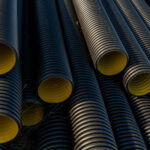
DWC (Double Wall Corrugated) pipes are manufactured using high-density polyethylene (HDPE pipes) and feature a unique dual-layer design:
- Outer Corrugated Layer: Provides high structural strength and resistance to external loads.
- Inner Smooth Layer: Ensures excellent flow characteristics and minimizes friction losses.
This combination makes DWC pipes ideal for underground applications where both strength and hydraulic efficiency are required.
Rising Demand for Efficient Drainage and Sewer Systems
One of the biggest drivers behind the demand for DWC pipes is the growing need for efficient drainage and sewerage systems. Rapid urban development has increased surface runoff, putting pressure on existing drainage infrastructure.
DWC pipes offer superior flow capacity, resistance to blockage, and long service life, making them a reliable solution for stormwater management and wastewater transport. Their ability to withstand soil pressure and traffic loads ensures consistent performance even in densely populated areas.
Role of DWC Pipes in Smart City Projects
Smart city initiatives focus on creating sustainable, technology-driven urban environments. Underground infrastructure plays a vital role in these projects, housing drainage systems, electrical cables, and communication networks.
DWC pipes are widely used in smart city developments for:
- Stormwater and sewage pipelines
- Telecom and fiber optic cable protection
- Electrical and utility ducting
Their flexibility and modular design make them easy to integrate into complex urban layouts.
Growing Infrastructure Investments and Road Projects
Governments and private developers are investing heavily in roadways, highways, railways, and metro projects. These developments require robust underground drainage and utility protection systems capable of handling heavy loads and continuous vibration.
DWC pipes, with their high ring stiffness and impact resistance, are well-suited for such applications. They perform exceptionally well under roads and highways, reducing the risk of deformation and long-term failure.
Advantages Driving the Popularity of DWC Pipes
1. High Strength with Lightweight Design
Despite being lightweight, DWC pipes offer excellent load-bearing capacity. This reduces transportation and installation costs while maintaining structural integrity.
2. Long Service Life
DWC pipes are designed to last over 50 years under normal operating conditions. Their resistance to corrosion, chemicals, and abrasion ensures consistent performance over time.
3. Faster and Cost-Effective Installation
Compared to traditional materials, DWC pipes are easier to handle and install. Push-fit joints and flexible connections reduce labor time and project delays.
4. Superior Hydraulic Performance
The smooth inner wall of DWC pipes minimizes friction, improving flow efficiency and reducing maintenance requirements.
5. Environmental Sustainability
Manufactured from recyclable HDPE, DWC pipes align with sustainable construction practices and reduce environmental impact.
Adaptability to Changing Environmental Conditions
Climate change has increased the frequency of extreme weather events such as heavy rainfall and flooding. Underground drainage systems must be capable of handling sudden surges in water flow.
DWC pipes provide flexibility and strength that allow them to adapt to soil movement and pressure changes without cracking or collapsing, making them ideal for future climate-resilient infrastructure.
Compliance with Modern Standards and Regulations
Modern infrastructure projects require materials that comply with national and international quality standards. DWC pipes are manufactured according to IS, ISO, and other global standards, ensuring safety, reliability, and regulatory compliance.
This makes them a preferred choice for government projects and large-scale infrastructure developments.
Future Outlook: Why Demand Will Continue to Rise
The future of underground infrastructure will focus on durability, efficiency, sustainability, and adaptability. As cities expand and infrastructure networks become more complex, the need for advanced piping solutions will only grow.
DWC pipes meet these evolving requirements by offering:
- Reliable long-term performance
- Reduced lifecycle costs
- Compatibility with smart infrastructure systems
- Environmentally responsible construction solutions
With ongoing investments in urban development, transportation, and utility networks, DWC pipes are set to remain in high demand for years to come.
Conclusion
The future of underground infrastructure depends on innovative materials that can support rapid urbanization while ensuring sustainability and resilience. DWC pipes have proven to be a reliable and future-ready solution for drainage, sewerage, and utility applications.
Their strength, flexibility, cost efficiency, and environmental benefits make them an ideal choice for modern infrastructure projects. As cities continue to grow and infrastructure challenges evolve, DWC pipes will play a crucial role in building strong, sustainable, and smart underground networks.